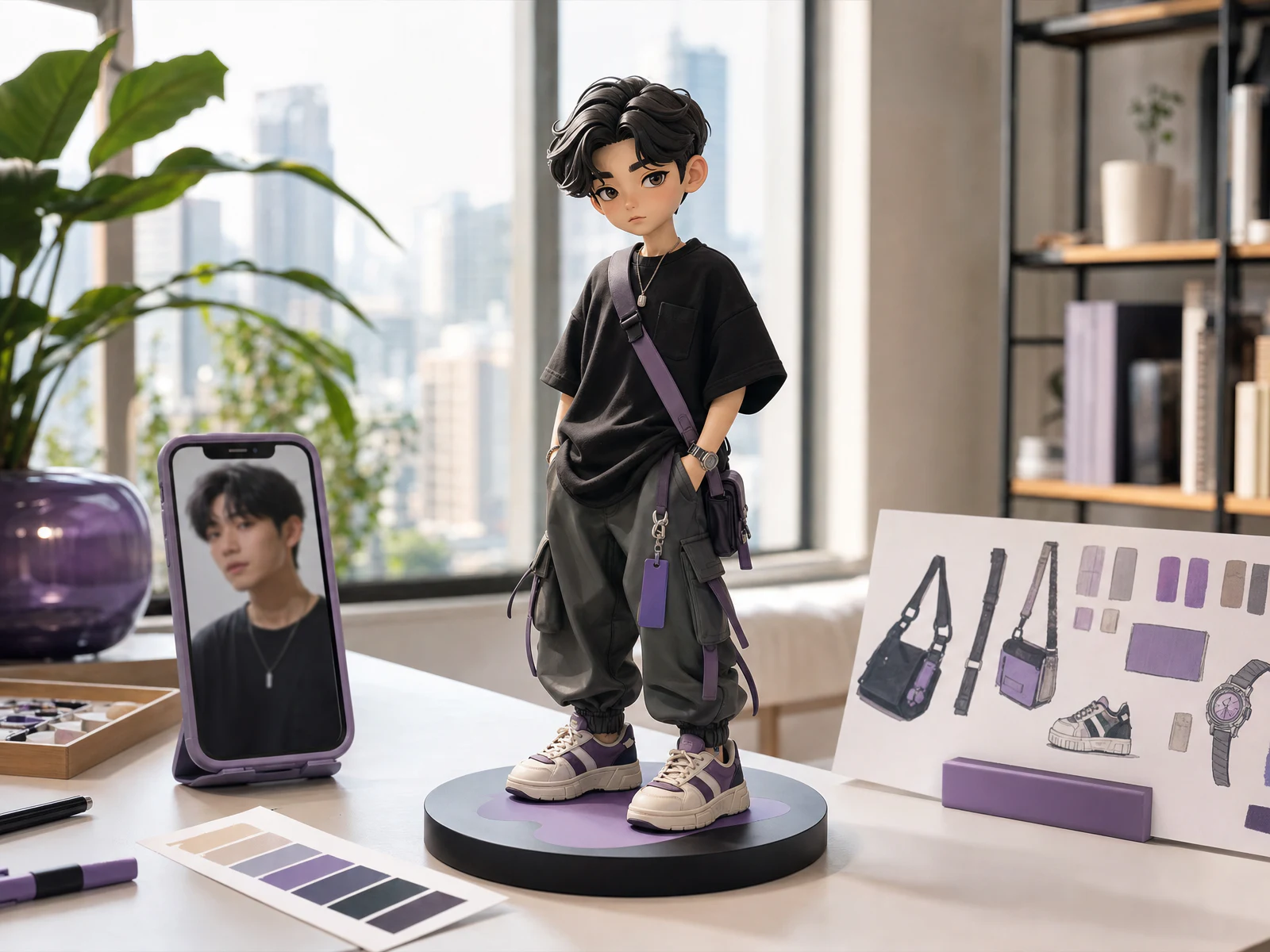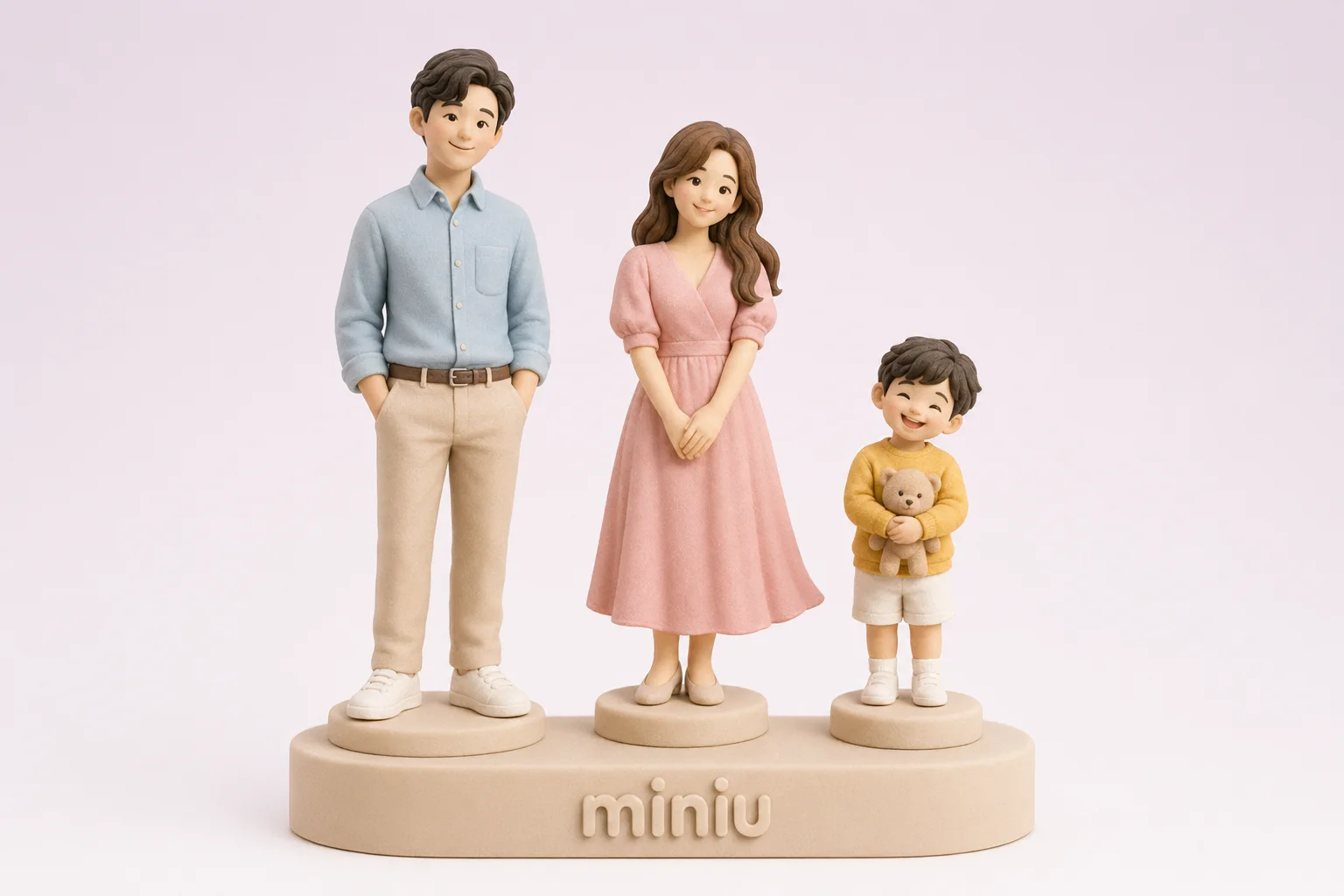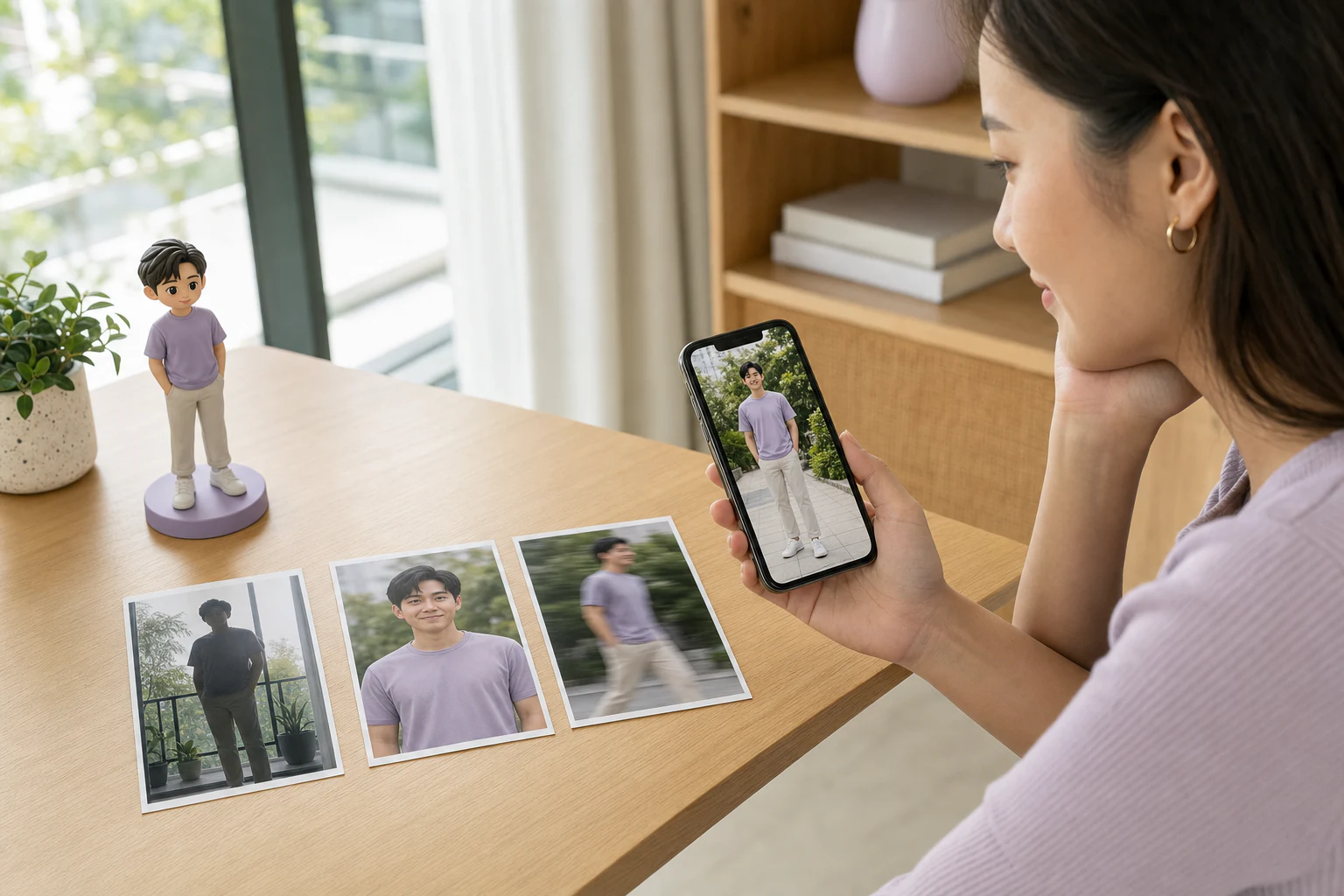
The processes diverge before finishing begins
Two products can both be called “resin figurines” while receiving colour in completely different ways.
Full-color resin
Shape and colour share one digital workflow
- Prepare the 3D geometry and surface colour data
- Review the Preview and design direction
- Print shape and colour together, layer by layer
- Remove support material, inspect, and finish
Printed, then hand painted
A monochrome object is produced before colour is interpreted again
- Print the resin object in one base material
- Wash, cure, sand, and prime the surface
- Apply paint by brush or airbrush
- Seal and complete final paint corrections
The meaningful difference is not simply machine versus human skill. It is where colour decisions become physical. A full-color workflow sends surface placement from the digital model into production. A painter must reinterpret that reference through colour mixing, brush control, masking, and layering on each individual object.
Compare the factors that matter on a personalized figurine
| Decision | Full-color resin | Printed, then hand painted |
|---|---|---|
| Repeatability | Reuses the same model and colour data, making the next copy more consistent | Every copy is painted again and naturally reflects new colour mixes and hand movements |
| Patterns and gradients | Handles mapped surface colour, clothing patterns, skin tones, and many transitions in one workflow | Can redraw and emphasize every area, but quality and time depend heavily on the painter |
| Surface character | Suits a consistent matte appearance that follows the digital design | Excels at visible brushwork, metallics, weathering, and deliberately exaggerated shading |
| Geometric detail | Depends on model quality, size, print resolution, thin features, and finishing, not colour count alone | Can use the same printed geometry; heavy primer or paint may soften tiny features, while expert shading can make forms read more clearly |
| Work after printing | Avoids painting the entire object but still requires support removal, inspection, and finishing | Adds priming, painting, drying, sealing, and correction stages |
| Best fit | Personalized likeness, controlled digital colour, and possible repeat orders | A singular collector piece where the painter’s interpretation is part of the value |
For a figurine based on a person, pet, or approved character design, full-color resin is usually the more controlled default. It keeps clothing, skin, hair, and accessories tied to the reviewed digital model and reduces the need to reinterpret every colour manually. Painting becomes the better answer when the customer is commissioning paint artistry itself.
“Precision” includes geometry and colour placement
It helps to separate two ideas that are often bundled into one marketing claim.
- Geometric precision comes from the 3D model, printer resolution, selected size, feature thickness, supports, and finishing. Neither a texture map nor a paintbrush can recover a finger, glasses frame, or engraved line that is not viable in the physical geometry.
- Colour-placement precision describes where a cheek tone, garment edge, shoe panel, permitted logo, or accessory colour lands on that geometry. Full-color printing has an advantage here because those positions remain attached to the same digital surface instead of being located again by hand over the entire model.
This matters on a small area containing several transitions: sports clothing, patterned fabric, eyes, facial hair, or a bicycle. Physical scale still sets the limit. Two colour regions that are clearly separate on a monitor may sit extremely close together on a small model. Consult the 3D figurine size guide before choosing a realistic or multi-person design.
More repeatable does not mean perfectly identical
A digital process can reuse the same geometry and colour coordinates without asking a painter to remix and place every tone again. That is valuable for team gifts, mascots, replacements, or an additional copy of an approved design.
There can still be small physical differences. Printer calibration, material, build orientation, position in a production run, support removal, finishing, and viewing light all influence appearance. A phone screen can also display the same file differently from a laptop. Full-color printer manufacturers therefore describe colour profiles and printable gamut rather than promising that every digital colour will emerge unchanged.
For a customer, the practical rule is simple: use the Preview to confirm design direction and colour placement, not as a laboratory colour proof. Miniu asks you to check style, overall likeness, hair, clothing, accessories, and composition before production. The How it works page explains that complete sequence.
If you are looking at your own result now, the figurine Preview checklist helps you review the important decisions before choosing a size and paying.
Examine real Miniu output across different subjects
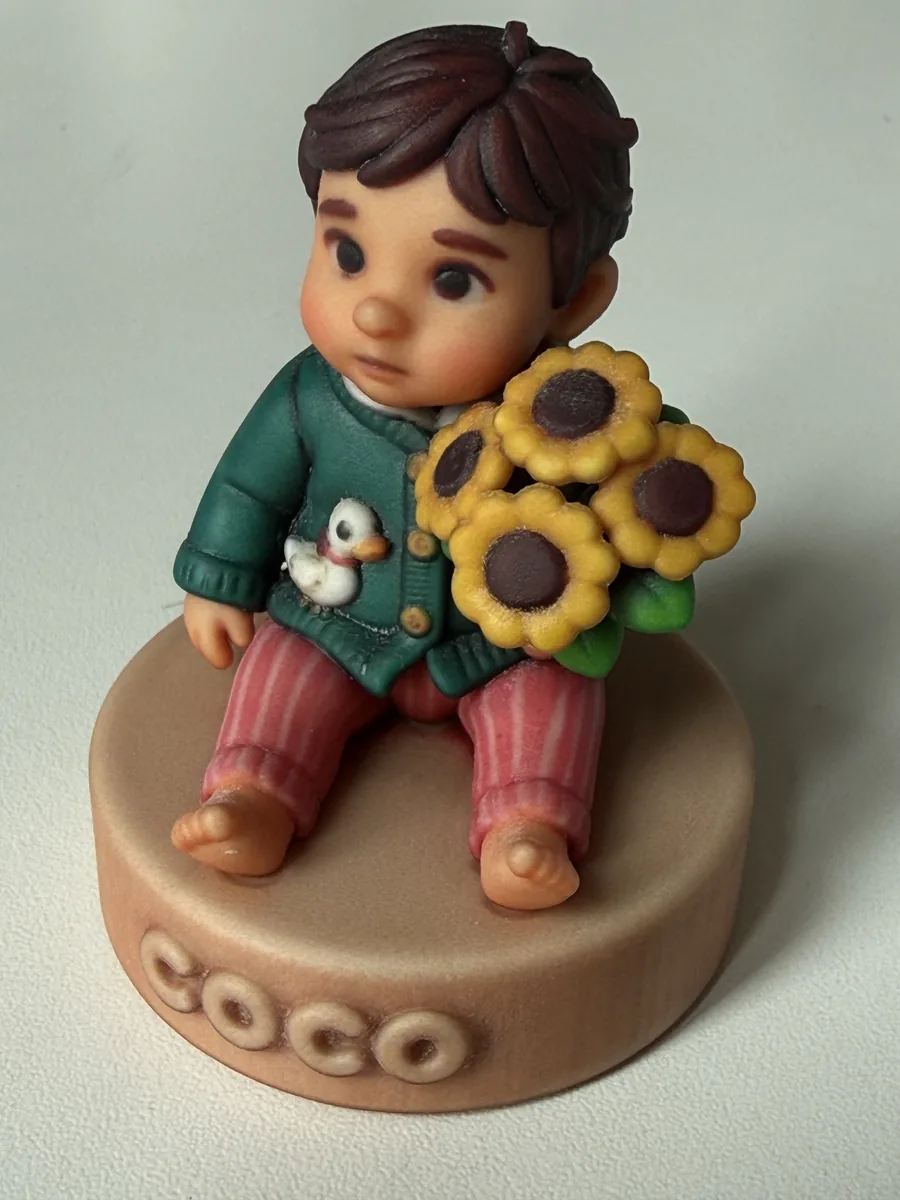
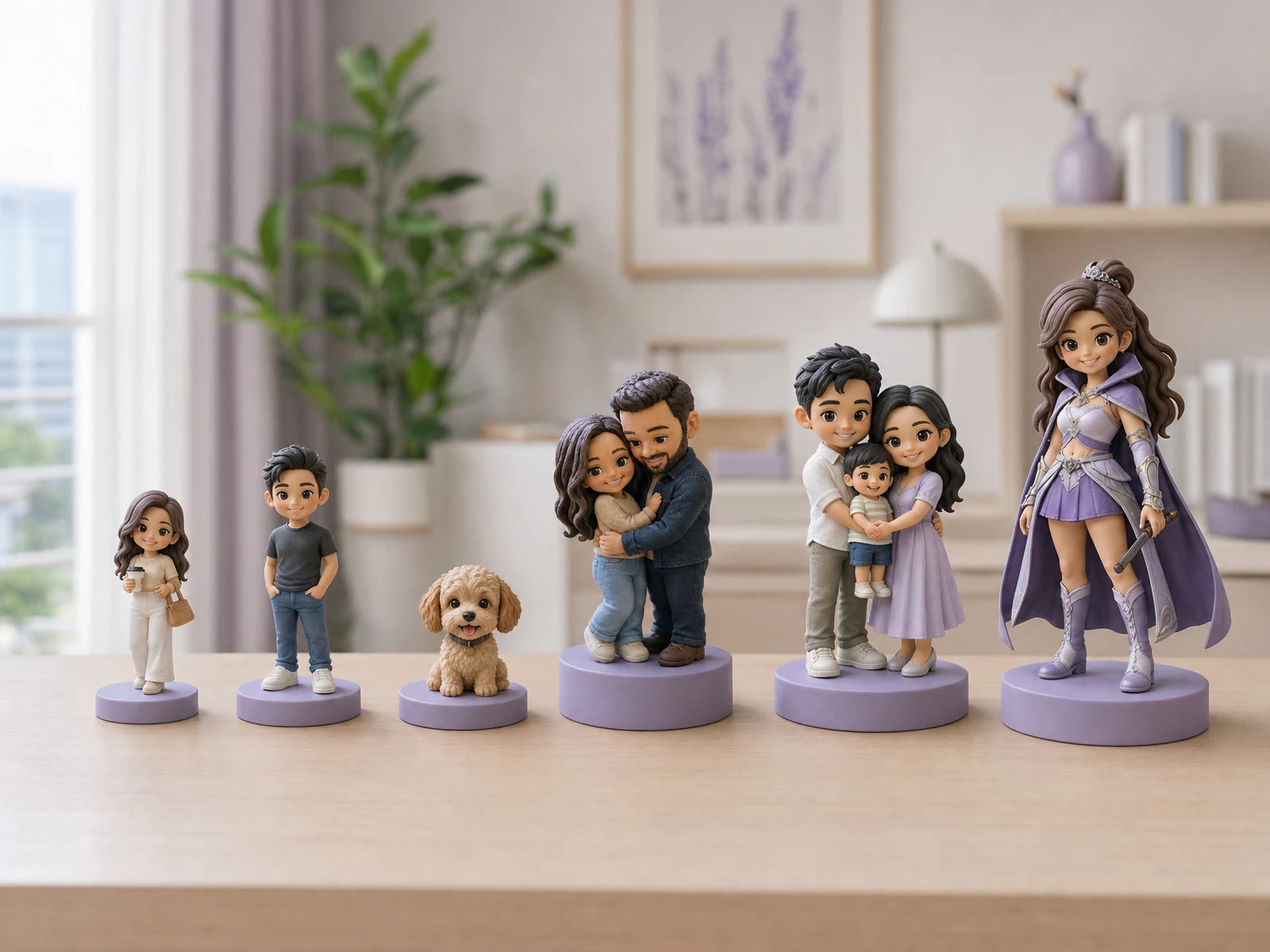
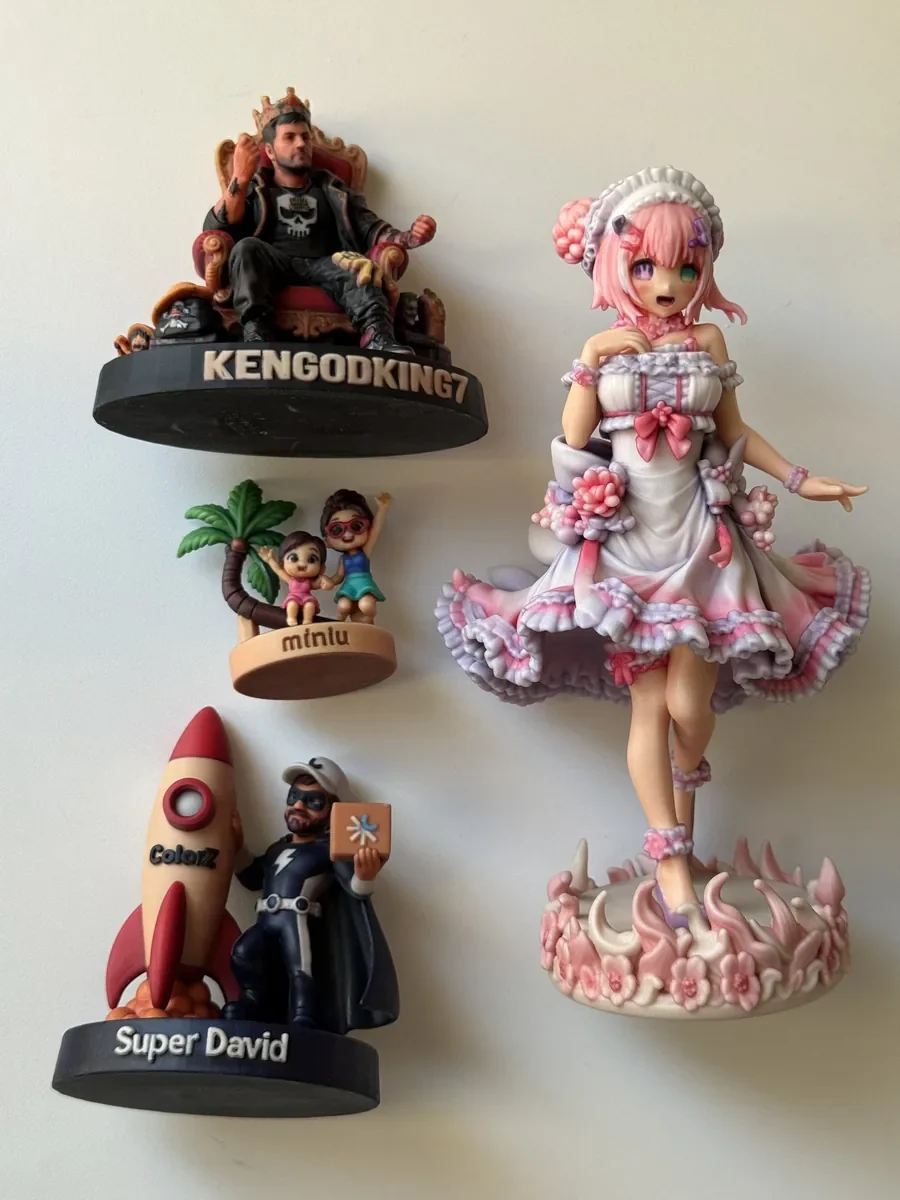
The photographs below show physical Miniu prints, not generated mockups. They are not a matched test against painted versions, so they should be read as evidence of real full-color output only. Look at how colour is distributed across clothing, faces, props, and differently shaped bases.
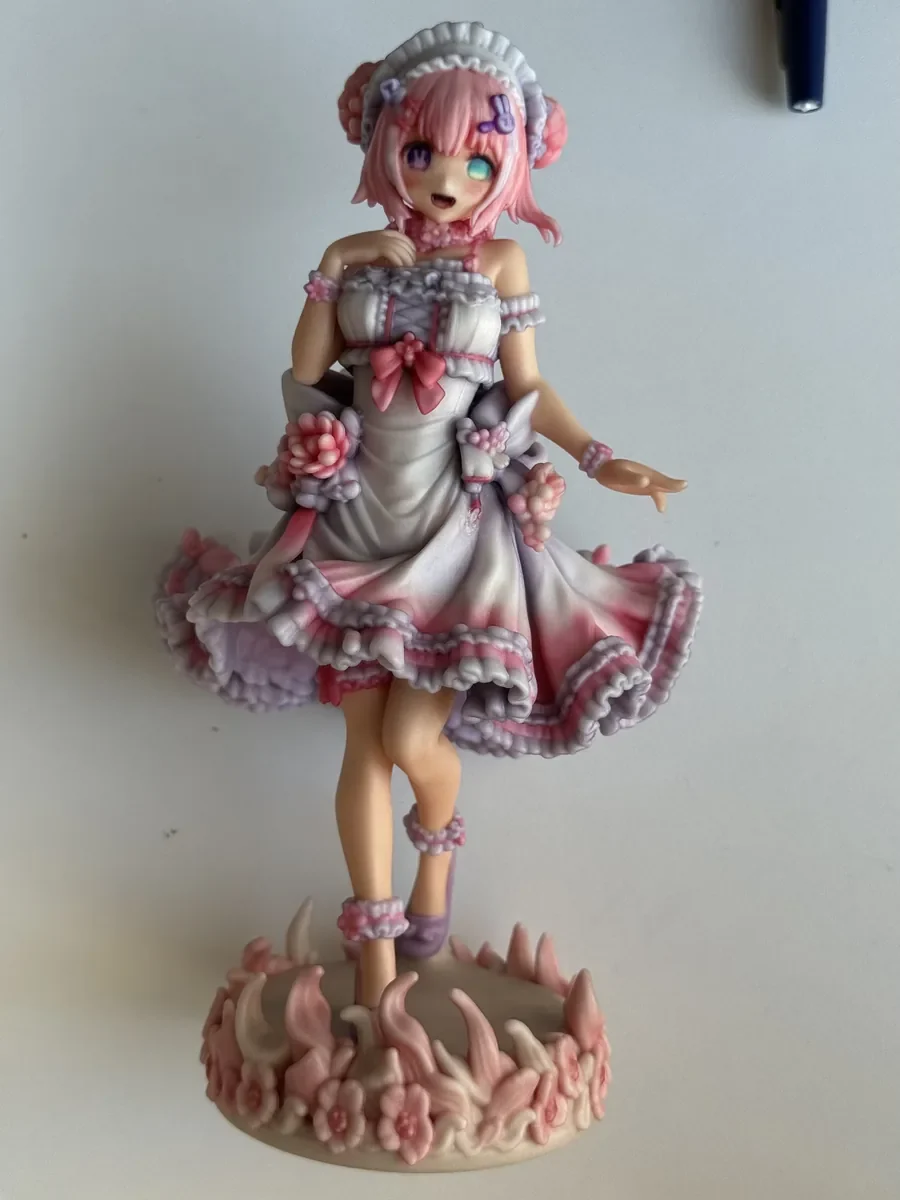
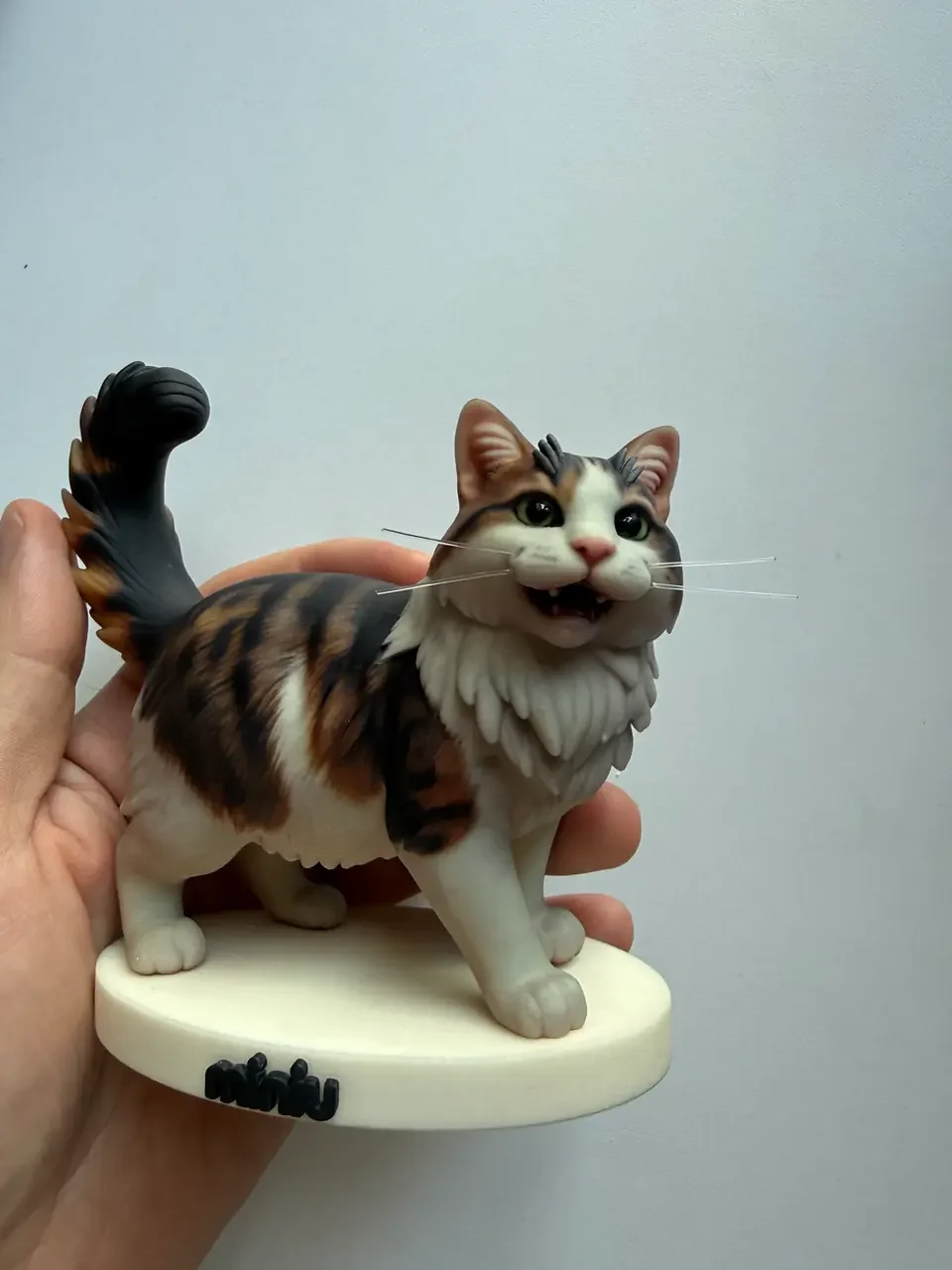
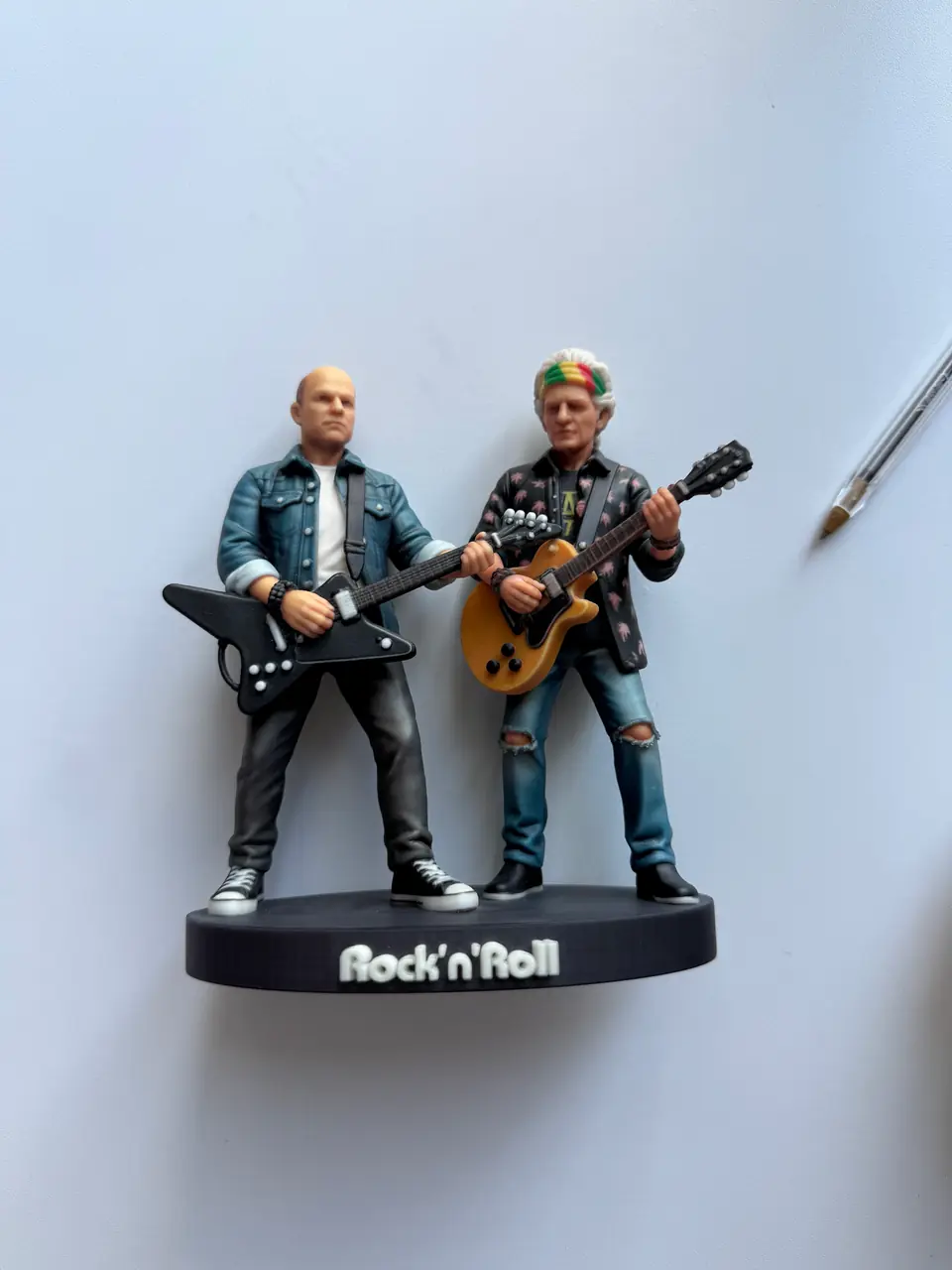
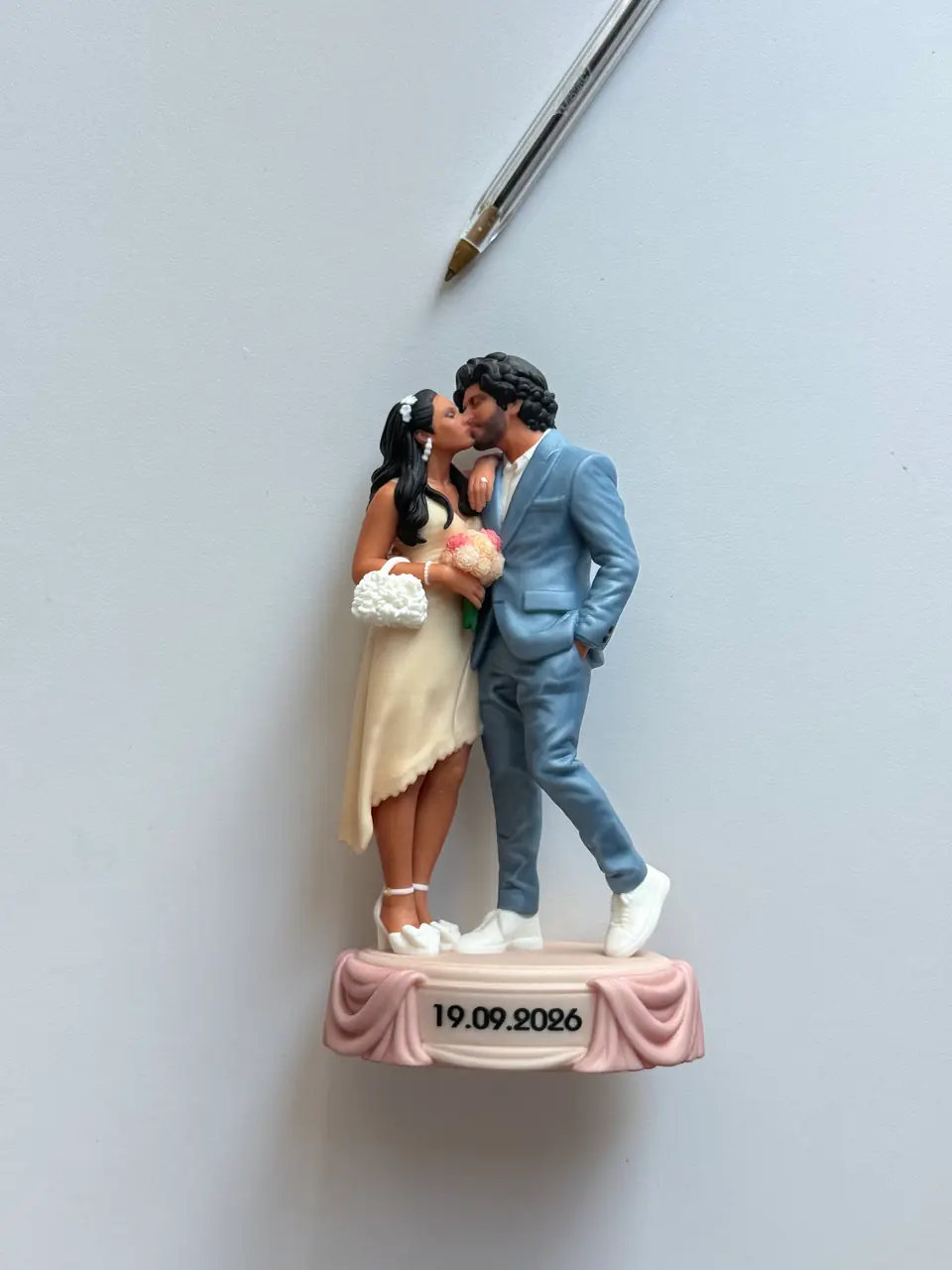
These examples demonstrate the process rather than guaranteeing equal detail at every scale. Faces and fine patterns have less physical room on a 4-6 cm piece than on a 10-15 cm display model. The information available in the source photo also determines what can be modeled credibly.
Choose hand painting when paint is the artwork
Hand painting is not an obsolete process. It is a different craft with clear strengths. Commission it when you value:
- the painter’s visible style and brush decisions;
- metallic, pearlescent, fluorescent, weathered, or distressed effects;
- deliberately exaggerated shadows and highlights for distance viewing;
- a one-off collector piece that may depart from the digital reference;
- local repair or selective repainting on an existing object.
Ask to see work by the specific painter who will complete the model. The outcome depends more on that person’s technique than on the word “resin” in the service description.
Choose full-color resin when the approved design is the reference
Miniu’s process is designed for customers who want to begin with a photograph, review a design, and keep the physical colour tied to that approved digital direction. It is particularly suitable for:
- portraits, pets, couples, and families made from photos;
- clothing and props containing several colours or transitions;
- gifts where the customer wants to inspect the direction before production;
- another copy of an existing design with less colour reinterpretation;
- a custom Art Toy or mascot with an established colour language.
Begin with the clearest primary photograph, then review likeness, style, clothing, props, and colour placement in the Preview before selecting the final size and paying. The custom figurine from a photo page explains the available directions, while current pricing lists the starting prices by size.
The short conclusion
Choose full-color resin when repeatability, digital control, and consistent placement matter more than individual brush character.
Choose hand painting when the paint treatment is the central artwork and variation between pieces is acceptable or desirable.
Miniu uses high-resolution full-color resin for personalized figurines because it connects geometry, colour, and the customer Preview within one production workflow. That does not mean a physical object will match a screen by 100%, or that printed colour replaces specialist painting in every situation. Being precise about those limits makes the comparison more useful and the eventual result easier to evaluate.
Once the finished piece arrives, the full-color resin figurine care guide explains where to display it, how to remove dust, and how to handle fine details.